Get to the bottom of it
A design can’t be hand-waved. From literature research to scientific grounding — food, life support, low gravity — we respect facts and data over the loudest voice.
About
Butian is a student club at the Qiushi Innovation Academy of Hangzhou No.2 High School, focused on space-settlement design, engineering practice and space-science outreach.
Mission
The club organizes learning around space-settlement design projects.
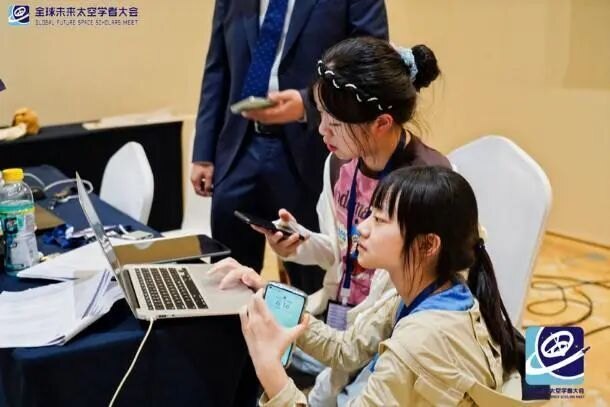
Members begin with competition briefs, research structure, habitat, operations and infrastructure in teams, then produce a proposal and defend it in English. The club provides a setting for research, design reviews, mock defenses and retrospectives, with established methods documented in the knowledge base.
Documentation
After each project, members organize proposals, working notes and retrospectives. Material suitable for publication enters the project archive and knowledge base for future members to consult and revise.
The website only publishes material that has been checked and is suitable for public access; incomplete historical information is labeled with its source and scope.
Culture
A design can’t be hand-waved. From literature research to scientific grounding — food, life support, low gravity — we respect facts and data over the loudest voice.
A space city must answer structure, habitat, operations and business at once. We’re used to forcing an idea into a verifiable proposal within fixed limits and tight time.
No one is good at everything. Structure, habitat, operations and infrastructure each have their experts — and we often team up on the spot with students from other schools. A proposal takes all of us.
Structure
The club runs under the Qiushi Innovation Academy, organized by competition teams and collaborating along the departments of a virtual aerospace company.
Butian belongs to the Qiushi Innovation Academy at Hangzhou No.2 High School. Launched in 2017 and grown from the Innovation Lab, the academy is called the school’s “college of engineering for students”.
For space settlement design competitions we organize as a virtual aerospace company, collaborating across five departments: management, structure, habitat, operations and infrastructure.
Teams are formed per competition — for example Team Yuheng and Team Tianquan at the 2024 GFSSM China round, both of which advanced to the national final.
Archive note:A publicly verifiable record of the club’s founding date, founding president and full list of past presidents is not yet available. Existing records confirm that former president Qian Kun captained Team Tianquan at the 2024 GFSSM, and that teachers Zhu Maoqi and Shao Wenxin advised related competition work.
Lineage
Public records sketch a fairly clear thread — from the founding of the Qiushi Innovation Academy to the club appearing by the name “Butian” in public reporting, clear from 2023 onward.
2017 · Qiushi Innovation Academy
The school established the Qiushi Innovation Academy, bringing the Innovation Lab and top-tier competitions into a systematic platform — fertile ground for innovation clubs.
2020 · First Space Scholars Meet
Per public reporting, Hangzhou No.2 High School students did well at the 2020 Future Space Scholars Meet — the earliest appearance we can trace; Team Tianji and others competed in the years after.
2023 · GFSSM champion, and outreach
In August, Teams Tianquan and Tianxuan designed a lunar base — Tianquan’s company won the national championship and Tianxuan’s took 2nd, also earning Best Structural and Best Habitat Design; in June, the club ran a space-science outreach program in Pan’an.
2024 · GFSSM China runner-up
Teams Yuheng and Tianquan designed a Venus-orbit space city, advanced to the national final, took national runner-up with their companies, and earned several team and individual honors.
2025 · Two podiums for a Mars base
Teams Tianshu and Tianquan reached the national final; Tianshu’s company “Orbital Industries” took 2nd and Tianquan’s “Jinwu Energy” took 3rd, with Tianshu also winning Best Qualifying Proposal.
Who Fits
We set no hard bar and value attitude over starting point. If you agree with most of the below, this is probably the place for you: